Use of RFID in clothing stores:
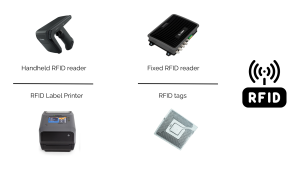
RFID labels (tags). RFID tags are placed on the item of clothing, each one contains a microchip with unique information about the item (size, color, price, etc.) and an antenna to transmit that information to readers. Like Zebra Technologies RFID tags.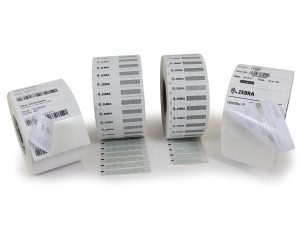
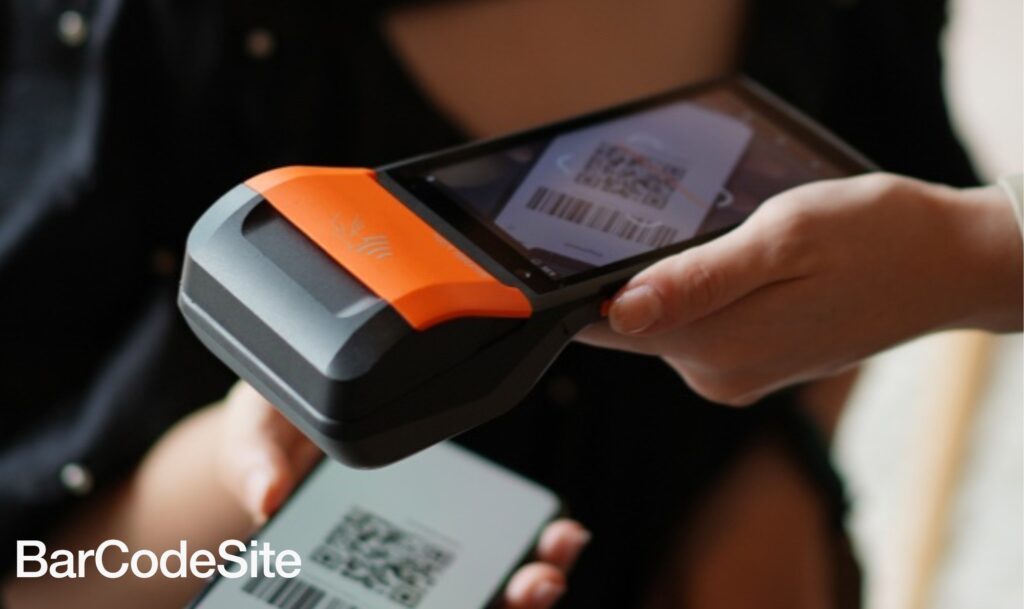
RFID readers. These are devices that emit radio waves to read RFID tags. They receive the signals emitted by tags and decode them to extract the information stored in the microchip. There are several types of RFID readers: handheld (portable) readers, fixed readers and integrated readers. An example of a handheld RFID reader is the Zebra RFD40.
RFID antennas. The antennas are used in conjunction with RFID readers. They are installed in different points of the store, to capture the signals of the labeled products.
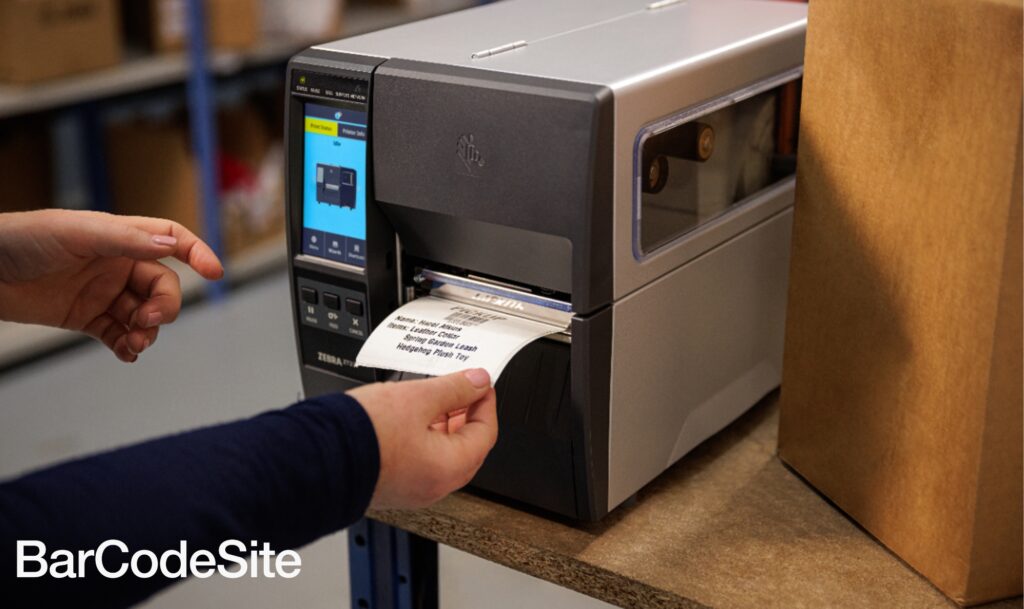
RFID printers. They are specialized printers that allow RFID labels to be printed and programmed with the necessary information for each product. They print the RFID tags the moment the products arrive at the store.
Software. Unlike the previous ones, it is not a physical device, but it is an essential element of RFID technology. They allow you to manage all the information collected by RFID readers, process it and analyze it in real time.
Advantages of RFID in clothing stores:
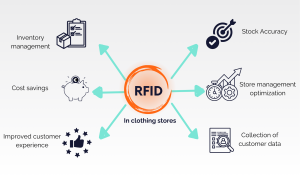
- –Inventory management. Provides complete real-time tracking of all stock on its way to sale. Thanks to this RFID technology, you can have control of each of the clothing units, avoiding errors of items with incorrect stock, without the need to scan manually. Additionally, you can know when inventory levels are low, which makes it easier to replenish products more efficiently.
- – Cost savings. Despite being a high economic investment a priori, costs are reduced in the long run due to the minimization of human errors. In addition, it reduces possible losses thanks to the identification of products both inside and outside the store, facilitating the prevention of losses and theft.
- –Improving customer experience. Customers can make their purchase quickly, avoiding long lines to pay, thanks to the RFID tags each product can be scanned individually.
- – Store management optimization. With RFID, the location of the store’s products can be accurately tracked, thus facilitating the relocation of garments and general organization of the store.
- – Collection of data about customers. RFID tags generate data on customer behavior such as which products are tested the most, best sellers, cost, etc. With all this information, marketing campaigns can be better focused, such as store distribution or the optimal quantity of each product.
Discover more about our RFID devices on our website and request your quote now for the one that best suits your needs.