RFID or barcode: Which is the best option for your business?
If you’re wondering whether RFID or barcodes are the best option for your business, in this blog, we’ll discuss their advantages and disadvantages, their applications, and a comparison to help you make your decision.The choice between RFID (Radio Frequency Identification) and barcodes depends on several factors specific to your business, such as the type of products, volume of operations, budget, and efficiency needs. Below are some comparisons between the two to help you decide which is best for you:
Barcode
Advantages of barcodes:
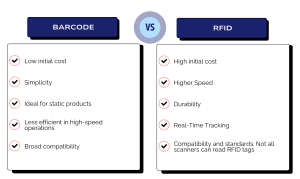
Low initial cost: Barcode systems are more economical to implement, both in terms of hardware and software.
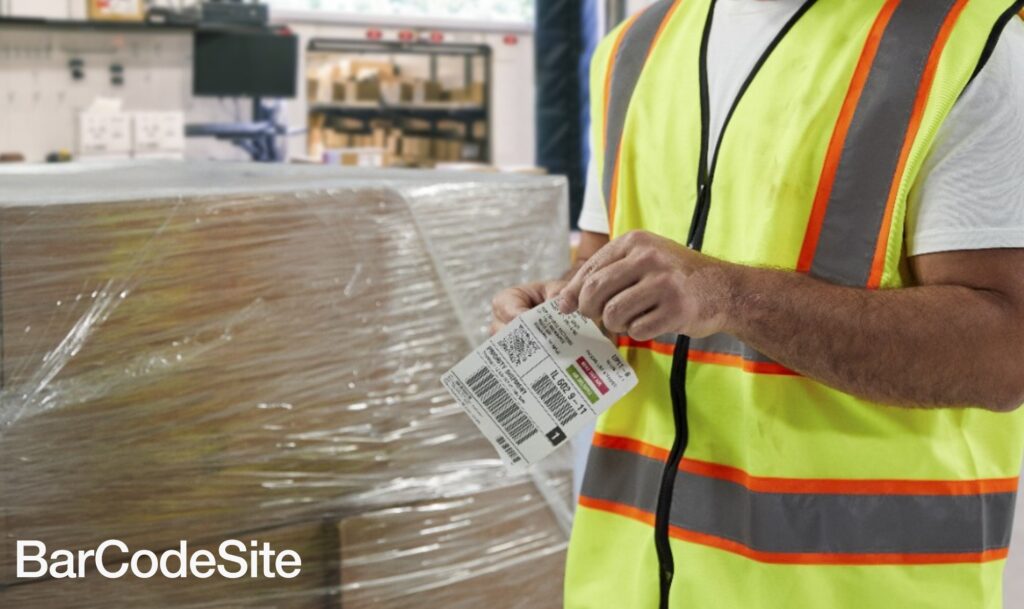
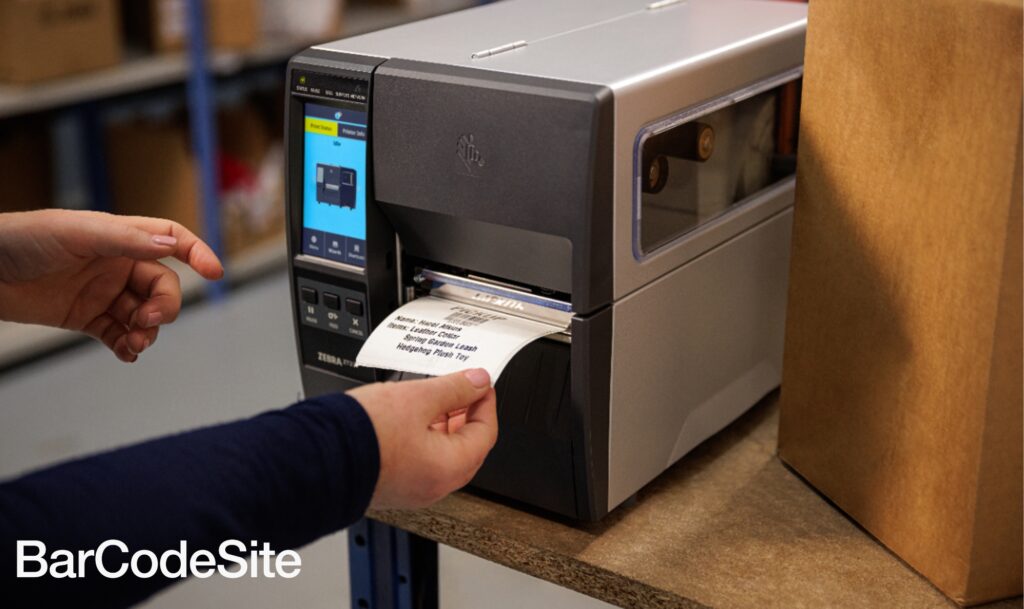
Simplicity: They are easy to implement and use. You only need barcode printers and scanners.
Ideal for static products: They work well for products that do not move frequently or for businesses with small, simple inventories.
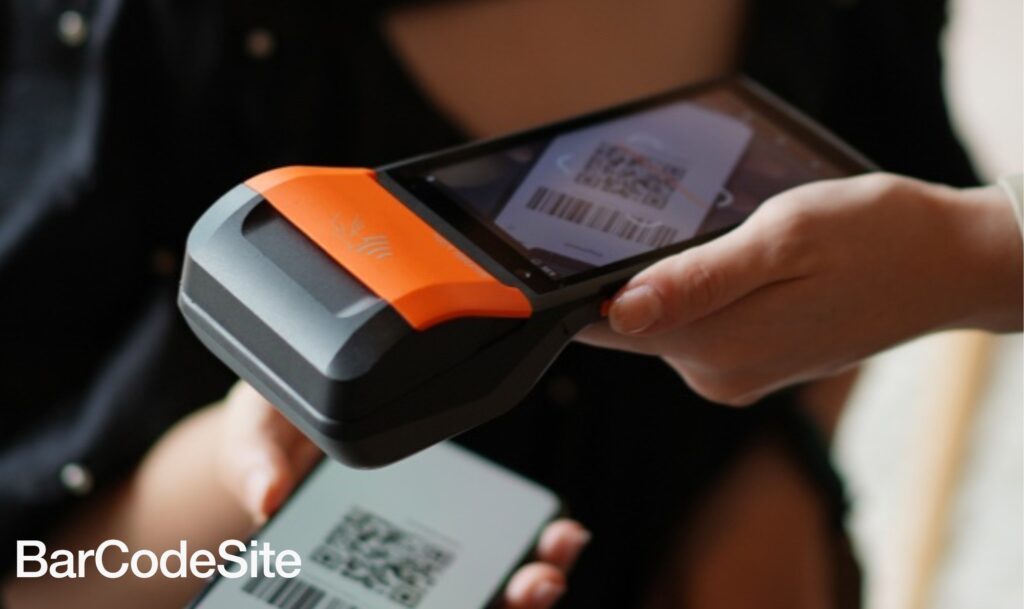
Broad compatibility: Barcodes are universal and can be read by almost any barcode scanner.
Widely used: Almost all businesses and companies use barcodes, making them a global standard.
Disadvantages of barcodes:
Requires line-of-sight: The scanner must “see” the barcode to read it, which can be inconvenient if the code is damaged or if products are stacked.
Less efficient in high-speed operations: Can be slower than RFID, especially if you need to manually scan each product.
Does not allow real-time tracking: Barcodes do not offer real-time inventory tracking. Each product must be scanned manually, which can take more time.
Our barcode devices

RFID (Radio Frequency Identification)
Advantages of RFID:
Contactless Reading: You don’t need a direct line of sight to read an RFID tag, which improves efficiency because you can read multiple items at once and from longer distances.
Higher Speed: Ideal for processes that require rapid scanning, such as in large warehouses, stores, or factories.
Real-Time Tracking: RFID enables more accurate, real-time inventory tracking, reducing the possibility of errors.
Durability: RFID tags are typically more durable than barcodes, making them useful in harsher conditions (e.g., in industrial environments).
Disadvantages of RFID:
High initial cost: RFID infrastructure (readers, tags, and software) is typically more expensive than barcodes, which can be a limiting factor for small businesses.
Compatibility and standards: Not all scanners can read RFID tags, and some frequencies may not be compatible in certain areas or industries.
Data maintenance and management: Managing RFID data sometimes requires specialized software and additional technological resources.
Our RFID technology

Which one should you choose for your business?
If your business has a small or medium-sized inventory, doesn’t require real-time tracking, and you’re looking for a more cost-effective option, barcoding is probably the best choice.
If your business handles a large volume of products, requires real-time tracking, or has an environment where efficiency and speed are key (such as a warehouse or store with high product turnover), RFID could be the best solution, despite the higher cost.
In short, if initial cost isn’t an issue and operational efficiency is key, RFID can significantly improve your operations. If you’re looking for something more affordable and simple, barcoding is still an excellent option.
For more information on RFID or barcode, which is the best option for your business? Contact our sales representatives and they will advise you in less than 24 hours. We have a wide catalog of barcode and RFID devices from top brands, such as Zebra Technologies.
VISIT OUR WEBSITE